Mystery King
A meal with the burger hidden and a pack of cards inside the box: Burger King Portugal turned its summer promo into a whodunnit you play at the table. The landing had to teach the rules, show all 21 cards and run inside the client's own site without touching it.
- Client
- Burger King Portugal · via Publicis Production
- Scope
- Front-end of the landing
- Stack
- HTML · CSS · jQuery 3.7 · Slick 1.8
- Platforms
- Web · desktop and mobile
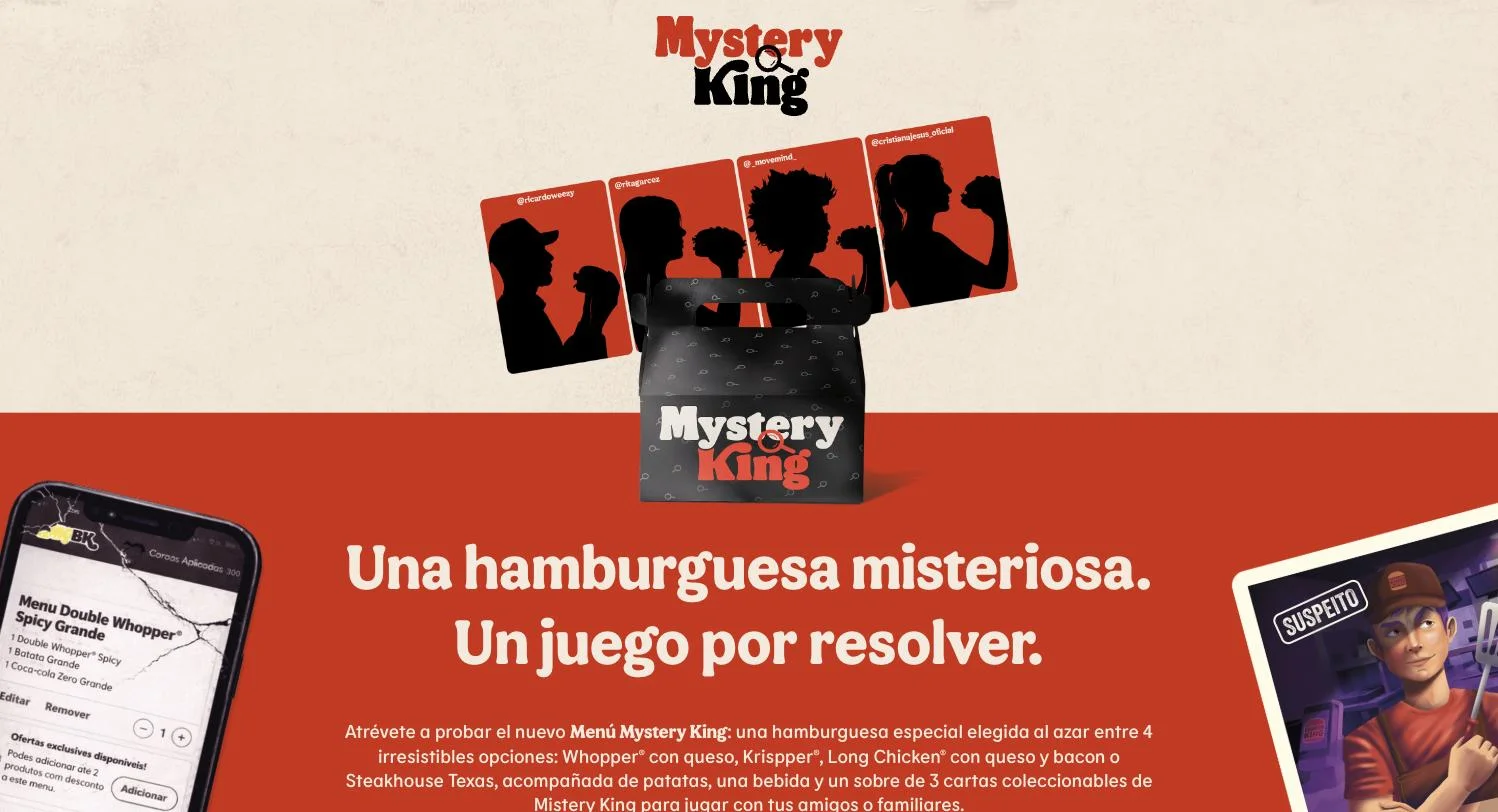
You don't know which burger you get. Or who stole the recipe.
The meal comes at random from four options and ships with three collectible cards. All 21 make a Cluedo-style game: someone stole the prototype from the Burger King Mansion, hid it somewhere and wiped the trail with an object. So the landing is both a menu showcase and a rulebook — two different jobs on one page.
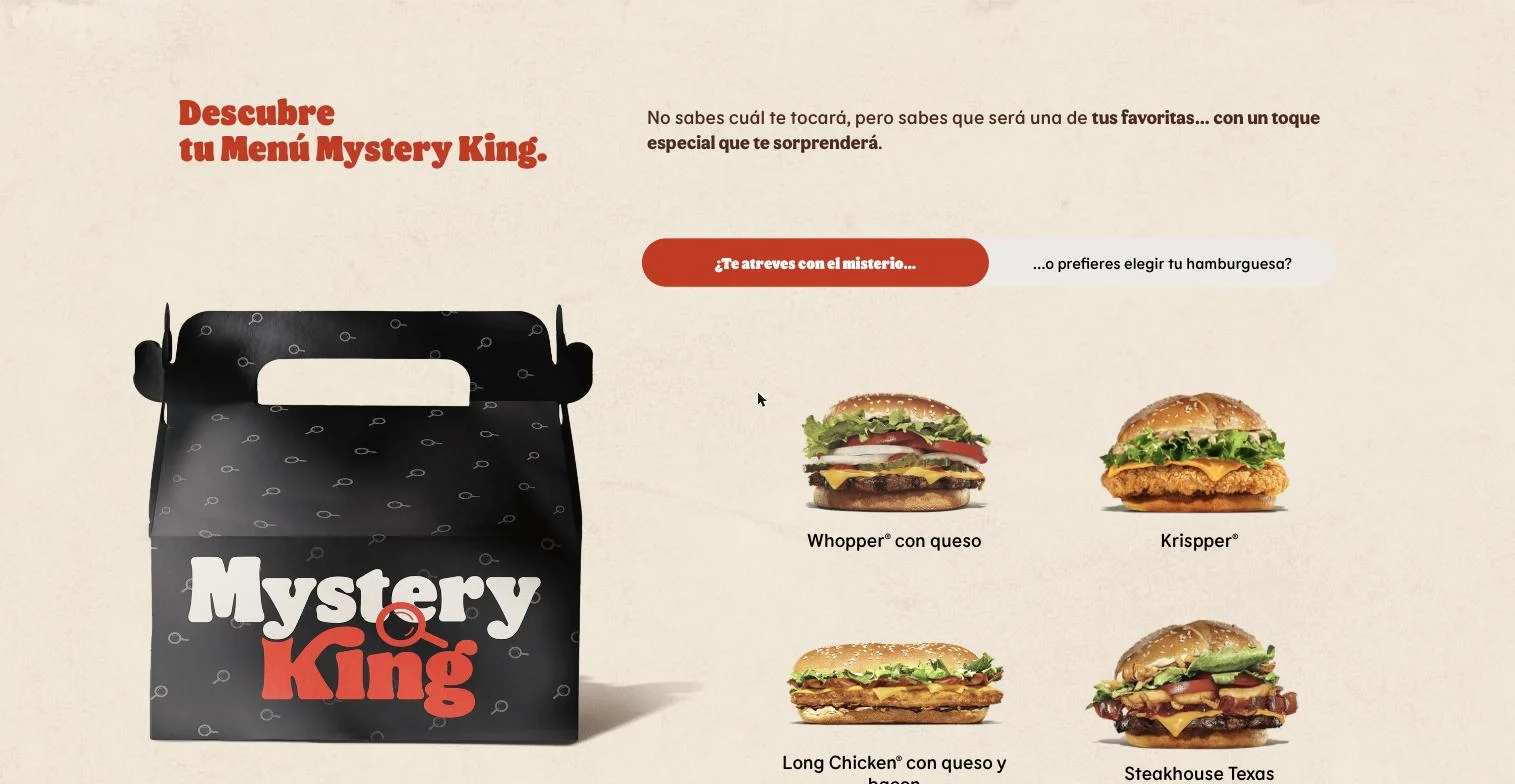
The promo doesn't live inside Burger King's site. It lives next to it.
burgerking.pt is a React SPA with Apollo and Sanity behind it, and a campaign neither lands in there on schedule nor should. The piece ships as a static bundle the client's site embeds: a 21 KB HTML file per language, its CSS, its JS and its images, served from a bucket with the version in the path. Nothing to build on the client side, nothing to break when the campaign changes — and Spanish, Portuguese and English are three sibling files, not three deployments.
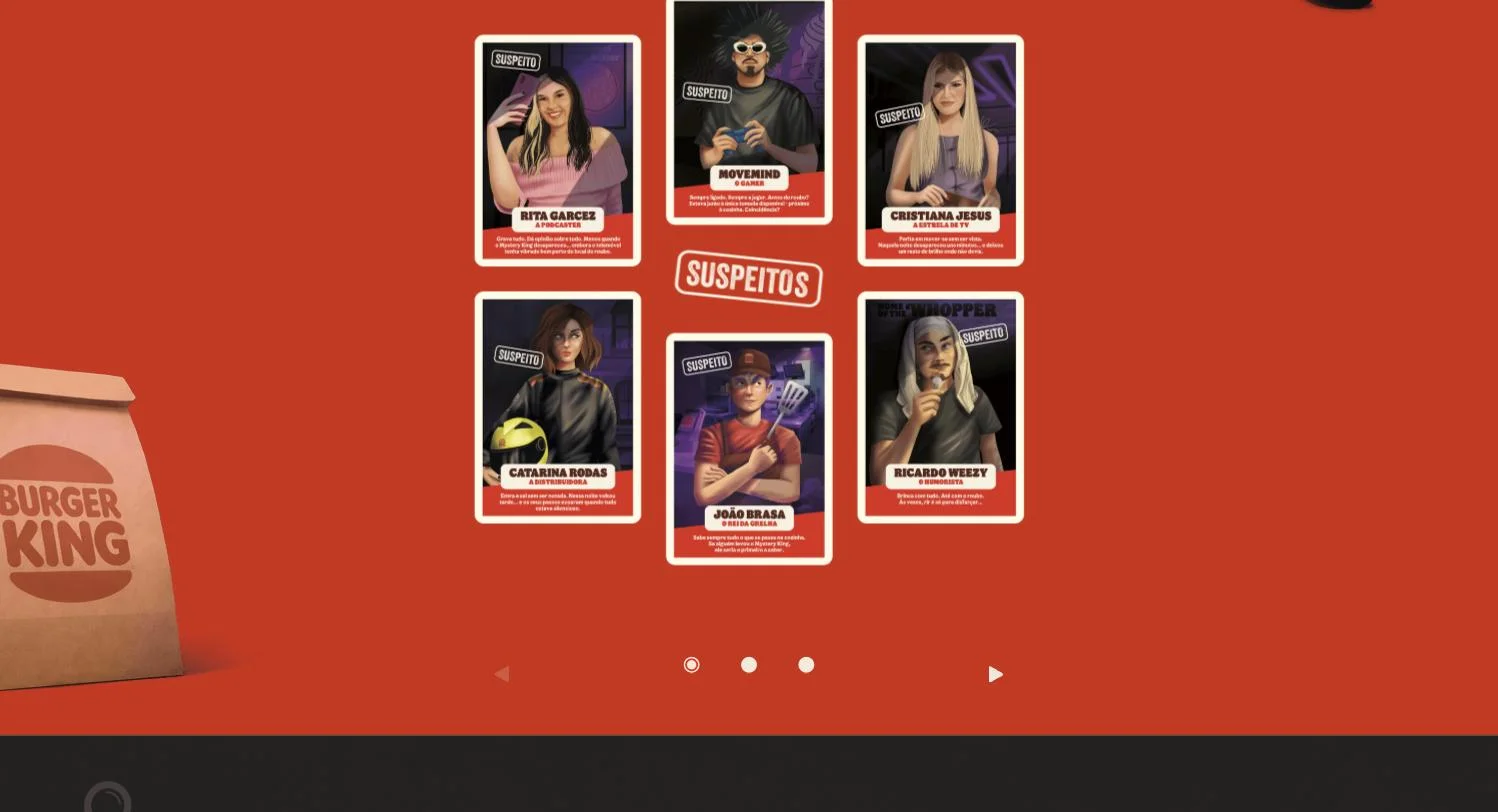
Twenty-one cards, three decks, and tabs that can't lie.
Suspects, places and objects are nested carousels: an outer one that switches decks and an inner one that pages through the cards. The part people notice when it breaks is the tabs — they have to follow the carousel, not just drive it, because you can also swipe. They hang off the slide-change event, so however you got there, the label always names the deck you're looking at.
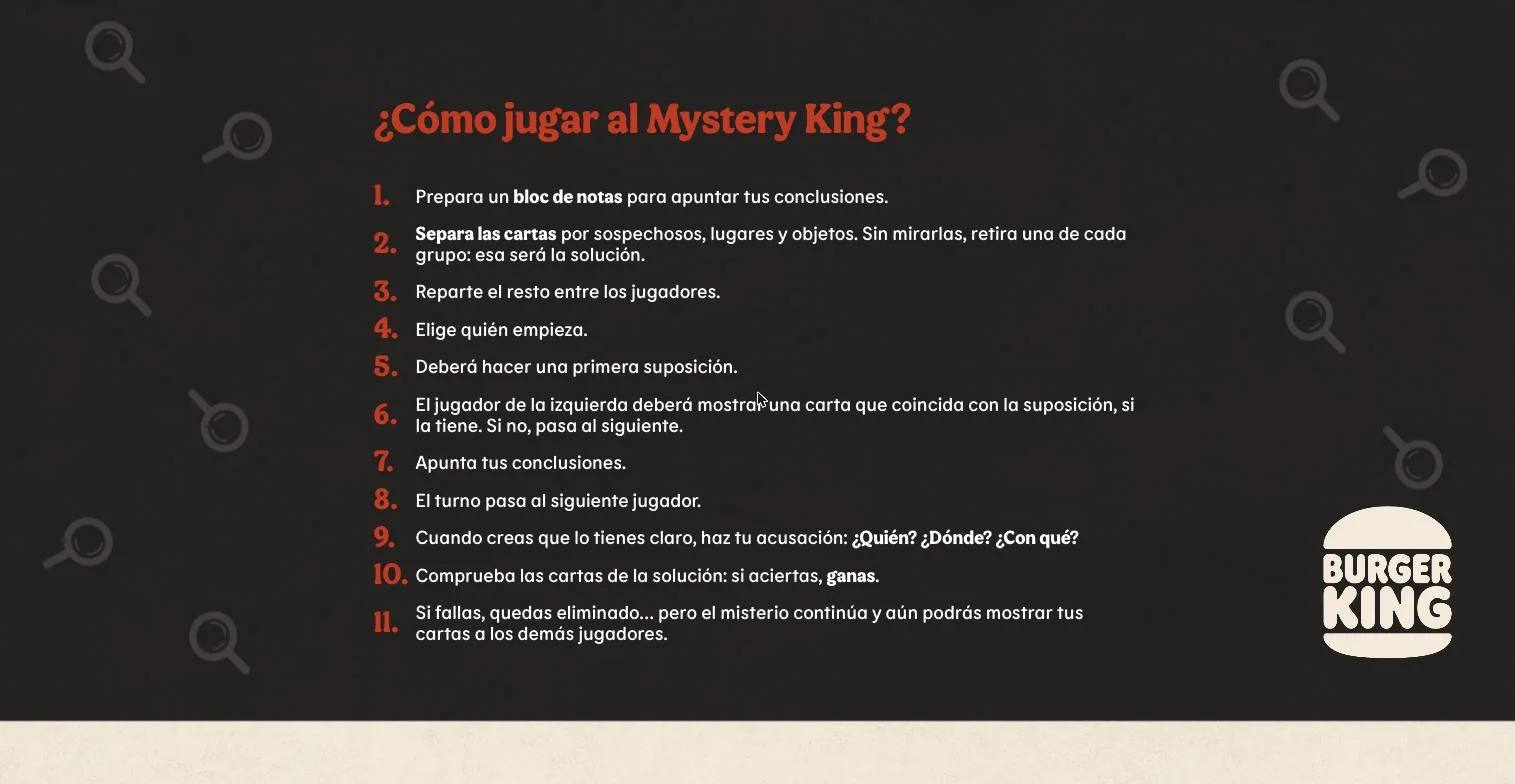
No framework, and not out of nostalgia.
For a piece served on its own and pulled down whole, a build step costs more than it saves: 29 KB of hand-written CSS and seven of own JavaScript do all the work. Sizing is governed by 46 clamp() calls and measurements in vw, with media queries only where the layout genuinely changes; the brand typefaces are self-hosted; and of the 41 images, 36 load lazily — which on a page full of illustrated cards is the difference between opening and waiting.
The page isn't the game: it's what explains the rules and shows you the cards before you open the box.
Does your campaign need a site to match?
Work delivered as part of the Publicis Production (Prodigious) team for Burger King Portugal. Promos are seasonal: the live link will work for as long as the campaign stays up.